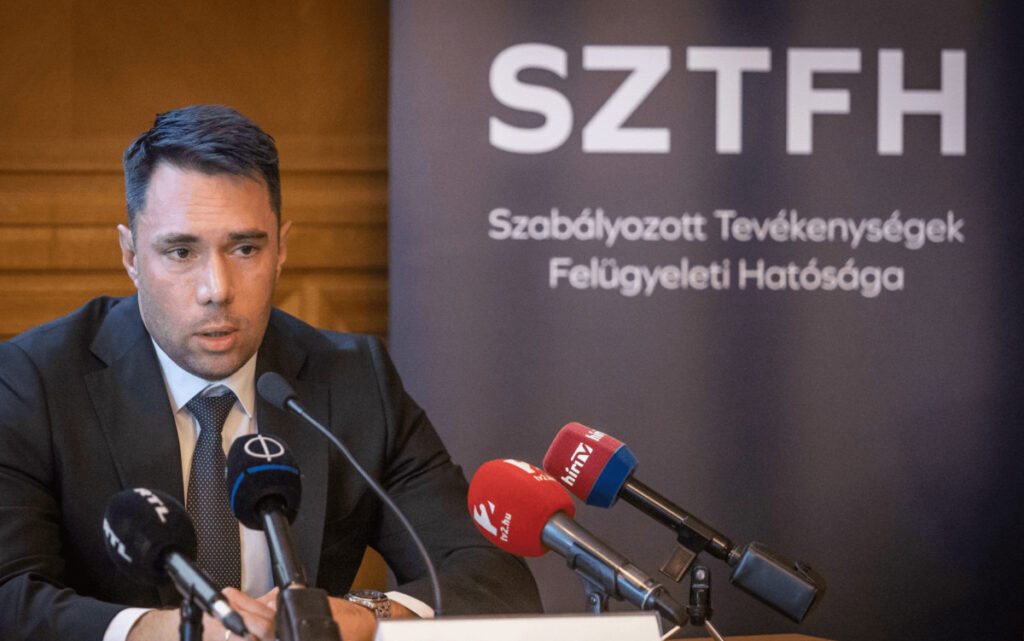
Hungary’s SZTFH Gambling Authority: A Regulatory Evolution
From Communist-Era Restrictions to Modern Digital Oversight
Hungary’s journey toward regulated online gambling represents one of Europe’s most fascinating regulatory transformations. The State Tax and Customs Administration of Hungary (SZTFH), known locally as NAV, emerged from decades of restrictive gambling policies to become a sophisticated digital gaming regulator. Unlike neighboring countries that rushed headlong into liberalization, Hungary’s methodical approach has created a framework that balances player protection with industry growth.
The transformation began in earnest following the 2014 Gaming Act, but the real revolution occurred when Hungary opened its digital doors in 2018. This wasn’t simply about legalizing online casinos—it was about creating a comprehensive ecosystem that could accommodate everything from traditional slots to modern crash games like Aviator and Plinko variations that have become increasingly popular among Hungarian players.
What makes Hungary’s regulatory approach particularly intriguing is how SZTFH has adapted its oversight mechanisms to handle the rapid evolution of game mechanics. Consider this: crash games, which barely existed when Hungary first drafted its online gambling legislation, now account for approximately 23% of all online gaming sessions among Hungarian players aged 18-34, according to 2026 industry data.
The Licensing Labyrinth: Understanding SZTFH’s Approval Process
Obtaining an SZTFH license isn’t for the faint of heart or shallow of pocket. The process requires operators to demonstrate financial stability through a minimum share capital of 500 million Hungarian forints (approximately €1.2 million), alongside comprehensive technical infrastructure audits. But here’s where it gets interesting—SZTFH doesn’t just evaluate traditional casino games.
The authority has developed specialized assessment criteria for crash games and provably fair gaming mechanics. Operators seeking to offer games like Mines or Spaceman must provide detailed algorithmic documentation, including random number generation protocols and hash verification systems. This level of technical scrutiny reflects SZTFH’s understanding that modern gambling extends far beyond spinning reels and card tables.
“The Hungarian market has become a testing ground for innovative game mechanics,” explains Dr. Katalin Varga, a gaming law specialist at Budapest University of Economics. “SZTFH’s willingness to engage with complex mathematical models and blockchain-based verification systems has attracted operators who might otherwise focus solely on more established markets like the UK or Malta.”
Licensed operators must also maintain servers within Hungary or the European Economic Area, ensuring that player data remains under European privacy protection standards. This requirement has led to interesting partnerships, with several major operators establishing dedicated Hungarian server farms to serve not just local players but as regional hubs for Central European operations.
Revenue Streams and Tax Obligations: The 20% Reality
Hungary’s 20% gross gaming revenue tax sits comfortably in the middle range of European gambling taxation, but the devil lies in the details of implementation. Unlike some jurisdictions that allow operators to deduct bonuses and promotions from taxable revenue, SZTFH calculates tax on gross revenue before promotional deductions.
This approach has created interesting strategic considerations for operators. Platforms like National Casino have adapted their promotional strategies to work within Hungary’s tax framework, often focusing on loyalty programs and cashback mechanisms rather than traditional deposit bonuses that might unfavorably impact tax calculations.
The revenue implications are substantial. In 2025, licensed Hungarian online gambling operators generated approximately €847 million in gross gaming revenue, contributing roughly €169 million in taxes to the state treasury. These figures represent a 34% increase from 2024, driven largely by the growing popularity of live dealer games and crash game variants.
Interestingly, SZTFH has implemented a tiered reporting system that requires different levels of detail based on operator size and game types offered. Operators offering crash games must provide additional algorithmic transparency reports quarterly, including detailed breakdowns of return-to-player percentages and volatility metrics across different bet ranges.
Player Protection Mechanisms: Beyond Standard Responsible Gaming
SZTFH’s player protection framework extends well beyond typical deposit limits and cooling-off periods. The authority has implemented what they term “behavioral pattern recognition requirements” for licensed operators, mandating the use of artificial intelligence systems to identify potentially problematic gambling behaviors.
These systems must flag players who exhibit rapid betting escalation patterns common in crash games, where the fast-paced nature can lead to impulsive decision-making. Operators are required to implement automatic intervention protocols when players exceed predetermined risk thresholds, including temporary game restrictions and mandatory cooling-off periods.
The data speaks volumes about effectiveness. Hungarian online gambling operators report that AI-driven interventions have reduced problem gambling indicators by approximately 31% since implementation began in late 2024. This includes a notable 43% reduction in rapid-fire betting sessions lasting longer than two hours, a pattern particularly common among crash game enthusiasts.
SZTFH also maintains a centralized exclusion database that operates across all licensed platforms. When a player self-excludes from one operator, the restriction automatically applies to all other Hungarian-licensed sites within 24 hours. This cross-platform approach has proven particularly effective in preventing players from simply moving between operators to circumvent responsible gambling measures.
Technical Standards and Game Certification Requirements
The technical certification process under SZTFH oversight involves multiple layers of testing that go far beyond basic random number generation verification. For crash games specifically, the authority requires operators to demonstrate mathematical models that ensure fair play across millions of game rounds, with particular attention to edge cases and extreme betting scenarios.
Certification laboratories must test crash games under simulated high-stress conditions, including scenarios where thousands of players simultaneously place maximum bets. These stress tests ensure that game algorithms maintain integrity even during peak usage periods, such as major sporting events or promotional campaigns that might drive unusual betting patterns.
“The Hungarian approach to crash game certification is among the most rigorous in Europe,” notes Marcus Chen, Chief Technology Officer at Gaming Labs International. “They’re not just looking at whether the math works—they’re evaluating how games perform under real-world conditions that other regulators might not consider.”
SZTFH requires monthly algorithm audits for all crash games, with operators submitting detailed logs of game outcomes, betting patterns, and any anomalies detected by their monitoring systems. This ongoing oversight has identified several instances where game algorithms required adjustment to maintain proper randomness distribution across extended play sessions.
Market Dynamics and Operator Competition in 2026
The Hungarian online gambling market has evolved into a fascinating competitive landscape where traditional casino operators compete alongside specialized crash game platforms and hybrid offerings. Current market data shows that 47 operators hold active SZTFH licenses, with approximately 60% offering some form of crash gaming alongside traditional casino games.
The competitive dynamics have shifted significantly as operators recognize that Hungarian players show strong preferences for games that combine skill elements with chance-based outcomes. Crash games perfectly fit this preference profile, leading to increased investment in exclusive game development and localized content creation.
Market concentration remains relatively distributed, with the top five operators controlling approximately 52% of total market share. This healthy competition has driven innovation in game offerings, promotional structures, and user experience design. Operators are increasingly focusing on mobile-first experiences, recognizing that 78% of Hungarian online gambling sessions now occur on mobile devices.
The geographic distribution of operators is also noteworthy. While many maintain primary operations in Malta or Gibraltar for regulatory convenience, several have established significant Hungarian presences to better serve local market preferences and maintain closer relationships with SZTFH regulators.
Cross-Border Cooperation and European Integration
SZTFH has emerged as a progressive voice in European gambling regulation discussions, particularly regarding the treatment of innovative game mechanics and cross-border player protection. The authority participates in regular information sharing agreements with regulators in Austria, Slovakia, and the Czech Republic, creating a regional approach to problem gambling prevention.
These cooperation agreements have practical implications for operators. A player who self-excludes in Austria, for example, can request that the exclusion be honored by Hungarian operators through SZTFH’s voluntary cross-border recognition program. While not mandatory, most major operators participate to demonstrate commitment to responsible gambling principles.
The authority has also taken a leading role in developing European standards for crash game regulation. SZTFH’s technical requirements have been adopted as best practices by several other European regulators, particularly regarding algorithmic transparency and real-time monitoring requirements.
Future Challenges and Regulatory Evolution
Looking ahead, SZTFH faces several significant challenges that will shape Hungary’s gambling landscape. The rapid evolution of cryptocurrency-based gambling presents both opportunities and regulatory headaches. While the authority has not yet authorized crypto gambling, internal discussions suggest that regulatory frameworks are being developed for potential future implementation.
The integration of virtual reality and augmented reality technologies into gambling experiences represents another frontier that SZTFH is actively monitoring. Early discussions with operators suggest that VR crash games and immersive casino experiences may arrive in Hungary within the next two years, requiring entirely new categories of technical certification and player protection measures.
Perhaps most significantly, SZTFH is grappling with the challenge of artificial intelligence in game design and player interaction. As AI becomes more sophisticated in predicting player behavior and personalizing gaming experiences, the authority must balance innovation with protection against potentially manipulative technologies.
The success of Hungary’s regulatory approach will likely influence gambling legislation across Central and Eastern Europe. As other countries observe Hungary’s balance of innovation encouragement and player protection, SZTFH’s model may become a template for emerging gambling markets seeking to avoid the pitfalls of either over-regulation or insufficient oversight.